Programming, graphics, games, media, C++, Windows, Internet and more...
# Block Wizard - Remake of My Old Online Game
Fri
30
Oct 2026
My puzzle game Block Wizard is back! Originally released in 2010 as a Flash game, it now has a web remaster that you can play directly in a modern browser, with mouse or touch controls.
Block Wizard combines match-3 puzzles with RPG-inspired progression: match blocks by color or symbol, earn experience, upgrade your skills, and spend mana to cast spells. Special blocks and cascading matches add new challenges as you work your way through 50 levels.
Give it a try — it is free to play, with no download or installation required. Can you complete all 50 levels?
Comments | #games #productions Share
# 6 Reasons Why Programming Is Especially Exposed to AI Automation
Tue
27
Oct 2026
Summary: While AI may transform our world in many ways, it seems to me that programming is especially exposed to automation. Below I share 6 specific reasons why.
Many decades ago, people imagined that advances in cybernetics would give us intelligent machines in the form of humanoid robots, speaking in metallic voices and helping people with various physical tasks.
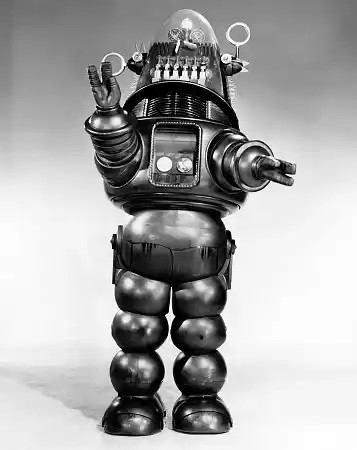
Robby the Robot from "Forbidden Planet", a sci-fi film from 1956
Things have developed differently. AI in the form of LLMs can do some intellectual work and, together with other models, generate realistic speech, images, and video, while general-purpose robots manipulating physical world are still very clumsy and far for being able to help us in everyday chores.
View Joanna Maciejewska’s post on X
I want AI to do my laundry and dishes so that I can do art and writing, not for AI to do my art and writing so that I can do my laundry and dishes. — Joanna Maciejewska
Switching to programming, I still remember reading the book "The Mythical Man-Month" by Fred Brooks a long time ago. The author argued that despite advancements in more convenient, higher-level programming languages, "there is no silver bullet" - no single development can provide an order of magnitude improvements in programming productivity. The argument behind it was that we can reduce the "accidental complexity" of the code (boilerplate code, manual memory management, friction with language syntax, etc.), but there is always "essential complexity" left to handle. If an app needs to provide 5 features, we need to specify all these 5 features fully and precisely how they should work. No matter how high level is the description, it always ends up being... some form of code.

I was thinking back then that a breakthrough would require computers to think like humans: take imprecise, incomplete requirements and turn them into code. My opinion was that programming requires knowledge, skill, and experience, but also analytical thinking and creativity. If computers could ever do it, surely they could do much of the other intellectual work that humans do, leading to changes much broader than just affecting programmers' jobs. I still share this opinion, except now we know it happened.
AI will likely transform our world in many ways, and I don't dare to predict what the future will bring. Right now, however, it seems to me that the nature of programming makes it especially exposed to automation. If we think about why that is, we can identify a few specific reasons:
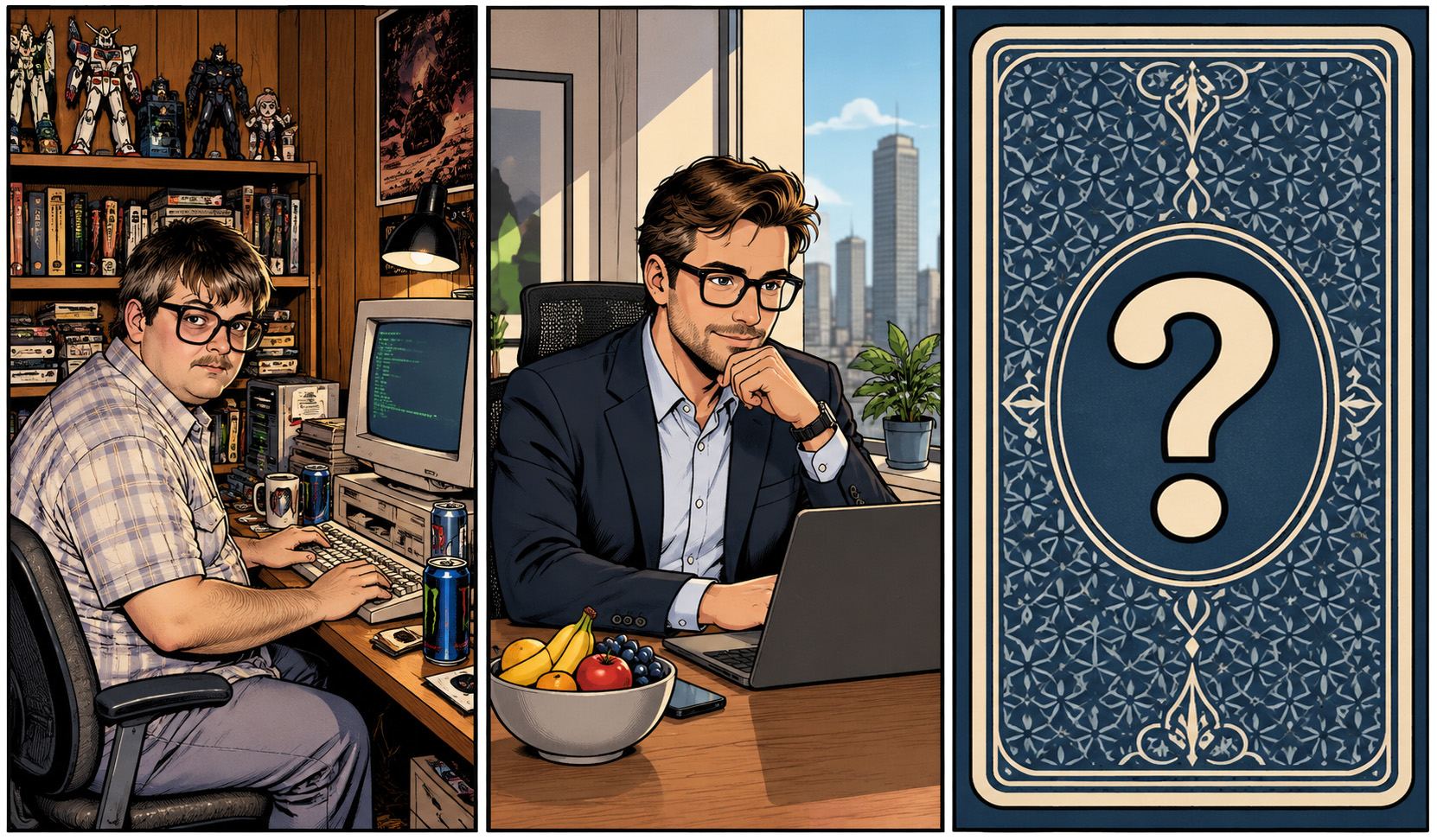
When thinking about my life, I can see that we have gone through several stages in how programmers are commonly perceived. First, when I was a teenager, there was the stereotype of a computer geek. This was before smartphones or social media, so spending time at home with a computer, playing games or learning programming instead of going out to play football, could make someone seem geeky, weird, or socially awkward. Then the perception flipped as mainstream media noticed that working in IT was a good career with high demand and high salaries. Possibly, we are now entering another phase, as the situation of programmers and the public perception of them change. Some young people I've spoken with are already choosing other careers because they don't believe a career in IT is future-proof.